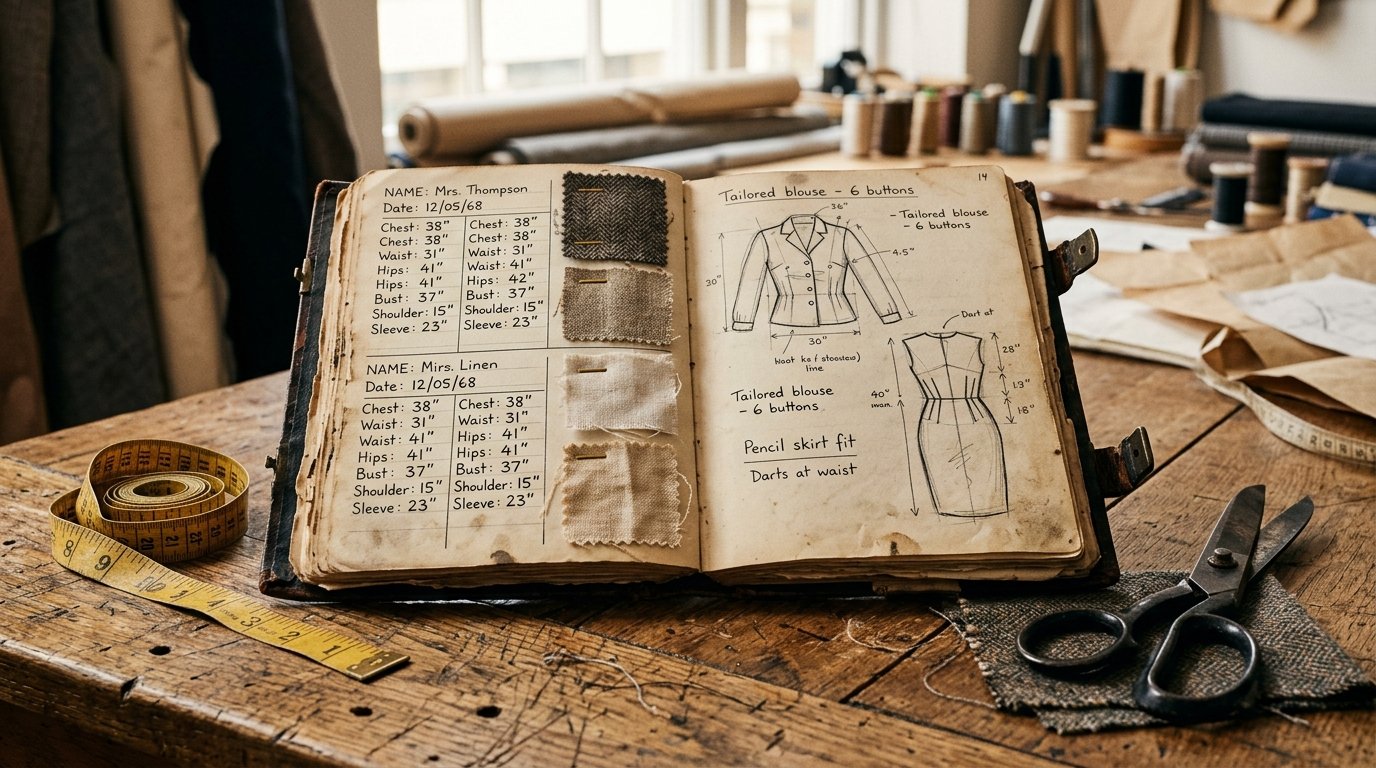
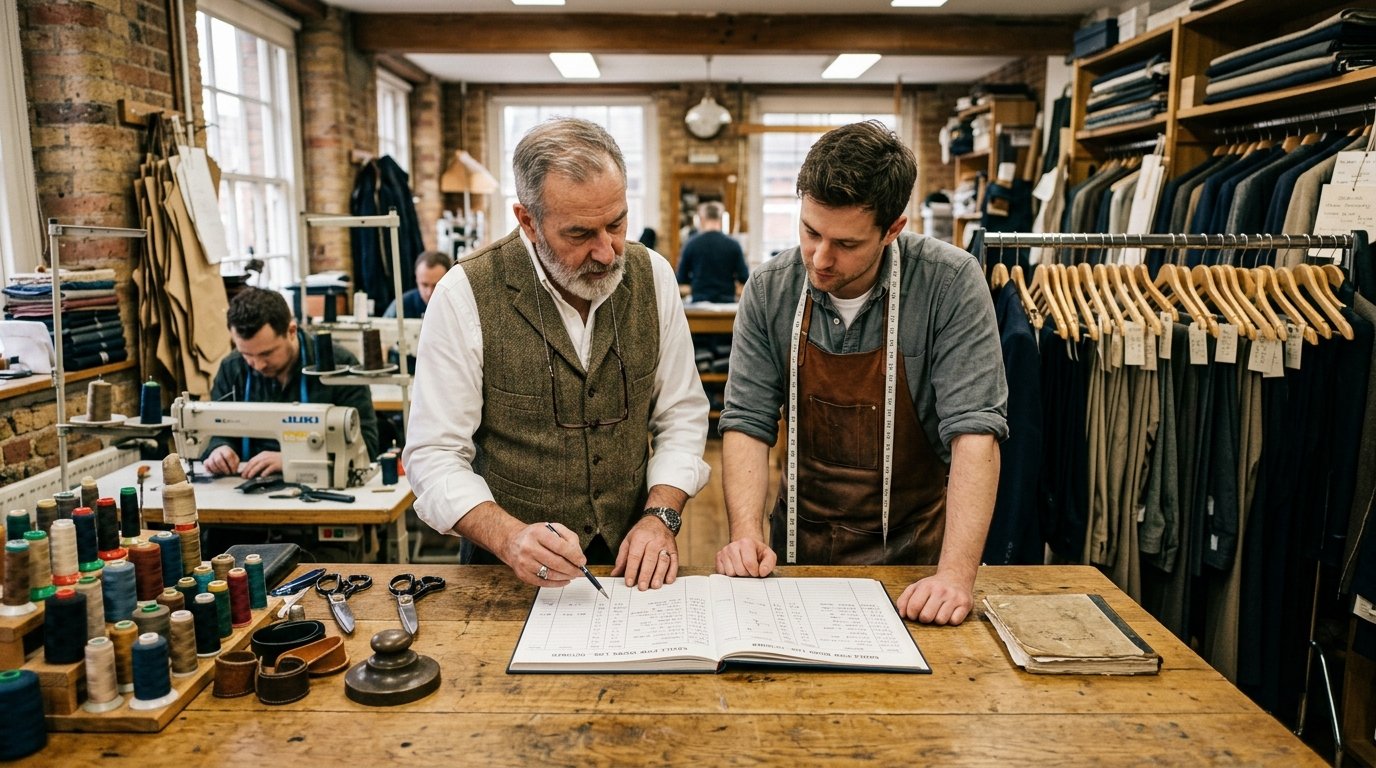
It is Saturday evening at 6:30 PM. The showroom floor is winding down, but inside your back workshop, the tension is palpable. Your head tailor stands in front of your cutting bench with a furrowed brow. You are holding your paper tally register; he is holding a creased scrap of paper pulled from his apron pocket.
"Bhaijaan / Sir, I stitched 22 blouses and 6 bridal lehenga skirts this week," he says. You check your manual register book. Your pencil marks only count 17 blouses and 4 skirts.
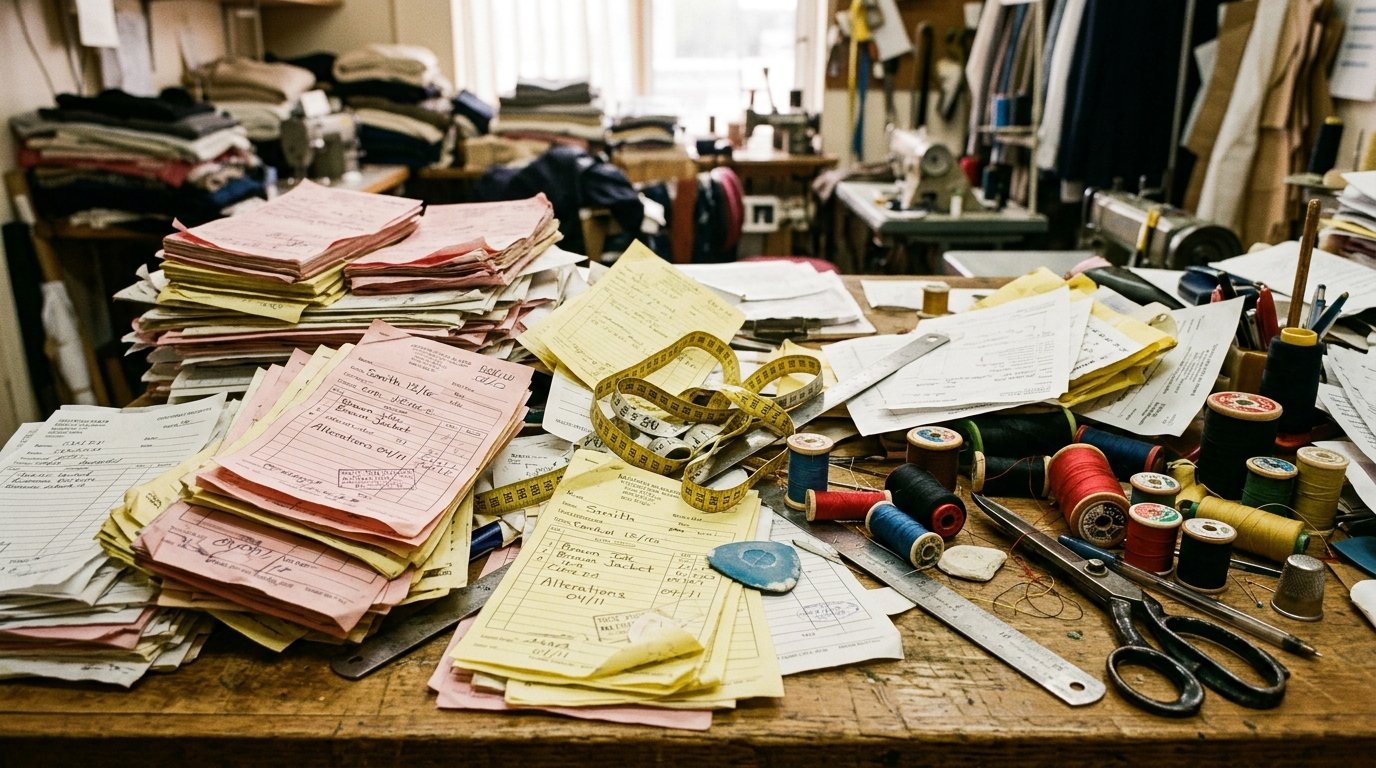
What happens next is an all-too-common disaster for custom apparel owners: an exhausting 45-minute argument over unrecorded orders, missing job chits, and disputed alteration tickets. You either give in and overpay—bleeding your net margin—or stand your ground and risk your most skilled craftsman walking out before next week's rush deliveries.
The Hidden Cost of Payroll Tension
Workshops that rely on handwritten chalk marks, cardboard tokens, or manual paper tally books report losing up to 14% of their productive tailoring capacity each week to payout arguments, recount delays, and artisan turnover.
Why Piece-Rate (Contract) Pay Dominates Custom Tailoring
In bespoke suiting, bridal couture, and ethnic tailoring, paying purely fixed monthly salaries rarely works. A fixed monthly salary fails to incentivize speed during peak festive and wedding seasons, while burdening your business with fixed overhead during dry summer months.
Piece-rate (also known as job-rate or karigar hisab) aligns incentives: tailors who stitch with speed and precision earn significantly more, while the studio maintains predictable cost-of-goods-sold (COGS) per garment.
The 5 Stages of Piece-Rate Garment Construction
The biggest mistake studio owners make is treating an entire garment as a single piece-rate item. In reality, a garment moves through multiple specialists. To prevent internal blame when a fit issue occurs, top ateliers unbundle garment production into distinct paid milestones:
| Production Stage | Responsible Role | Piece-Rate Deliverable | Quality Check Gate |
|---|---|---|---|
| 1. Master Pattern Cutting | Master Cutter / Pattern Maker | Drafting from client metrics & fabric rough cut | Grainline alignment & seam allowance verification |
| 2. Interfacing & Basting | Under-Tailor / Apprentice | Fusing canvas, pocket bags, and baste seams | Symmetry & balance check on mannequin |
| 3. Machine Assembly & Stitching | Senior Tailor / Specialist | Dart manipulation, structural seams, zip & lining | Measurement tolerance within ±0.25 inches |
| 4. Embellishment & Hand Finishes | Artisan / Handworker | Hook-and-eye, buttonholes, hand hemming, beading | Knot strength & secure stitch inspection |
| 5. Final Pressing & Steaming | Ironing Technician | Couture roll-pressing and hanger presentation | No shine marks, clean garment bag inspection |
Sample Rate Card: Structuring Predictable Piece Rates
Here is a battle-tested rate card structure utilized by high-margin bespoke tailoring studios. Adjust values to your local currency and market standards:
| Garment Type | Standard Cutting Rate | Machine Stitching Rate | Hand Finishing Rate | Total Labor COGS |
|---|---|---|---|---|
| Basic Saree Blouse | ₹150 / $5 / £4 | ₹350 / $12 / £9 | ₹100 / $3 / £2 | ₹600 / $20 / £15 |
| Padded Designer Bridal Blouse | ₹300 / $10 / £8 | ₹750 / $25 / £20 | ₹250 / $8 / £6 | ₹1,300 / $43 / £34 |
| Bespoke 2-Piece Suit (Men's) | ₹1,200 / $40 / £30 | ₹2,800 / $95 / £75 | ₹800 / $28 / £22 | ₹4,800 / $163 / £127 |
| Couture Evening / Ball Gown | ₹800 / $28 / £22 | ₹2,200 / $75 / £60 | ₹1,000 / $35 / £28 | ₹4,000 / $138 / £110 |
How Boutique Manager Eliminates Tailor Payout Arguments
With Boutique Manager's Staff & Workshop Module, every garment piece is digitally assigned to a specific tailor with an agreed piece rate. Tailors log completions from their own phone ("My Work" view). At weekend payout, a 1-tap PDF statement shows every order number, date, and completed piece.
5 Golden Rules to Prevent Karigar Turnover
- Assign the Piece Rate Before the Fabric is Touched: Never allow a tailor to start a difficult silk, organza, or velvet piece with a vague promise to "figure out the pay later."
- Enforce a 2-Way Digital Log: When a tailor completes a seam, they mark it completed on their terminal or mobile. Both owner and tailor see the exact same ledger tally in real time.
- Separate Alteration Compensation from Original Cuts: If an alteration is caused by the customer's weight change or altered shoe choice, compensate the tailor for the extra rework. If it is caused by the tailor failing to follow the measurement card, the rework is their responsibility. Clear software audit trails remove all ambiguity.
- Provide Instant Advance Deductions: If a craftsman takes a mid-week cash advance, log it immediately into their cloud ledger so it deducts automatically from their Saturday envelope.
- Protect Financial Confidentiality: Never let tailors browse full client phone numbers or retail prices. Give them access only to the garment specs, cut notes, and their own earned labor rates.