
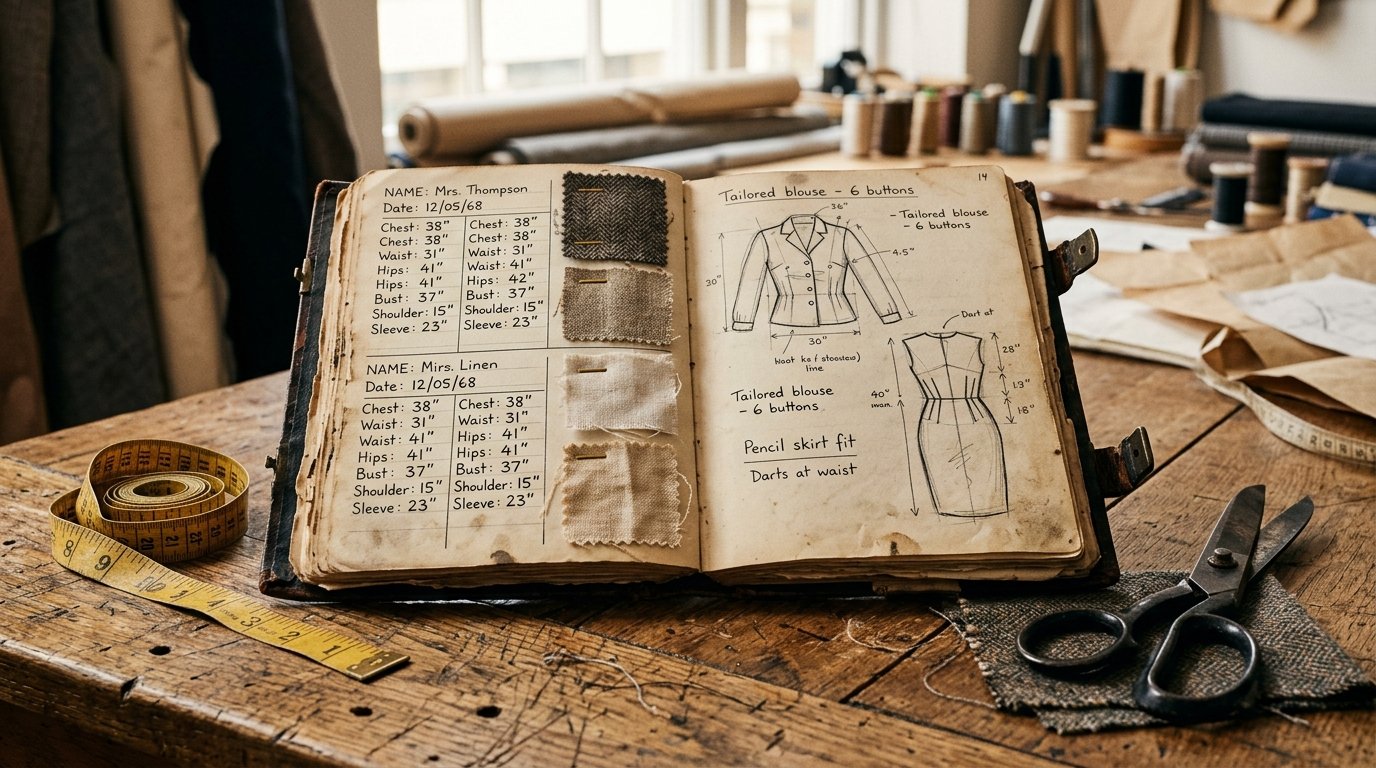
When you first open a boutique or tailoring studio, the trusty paper notebook feels like the most natural tool in the world. It requires no electricity, costs $2 / ₹150 at the stationer, and fits comfortably on the cutting table. For your first 15 to 25 orders a month, it works just fine.
Then your business grows.
Suddenly, you are managing 50, 80, or 150 active garments across multiple tailors, cutters, and hand-embroidery artisans. The paper register that once felt simple transforms into the single biggest operational liability in your building.
The 4 Hidden Financial Leaks of Paper Registers
1. The Catastrophic Cost of "One Wrong Cut"
Consider what happens when a master pattern cutter misreads a handwritten pencil number — confusing a "34" chest for a "36", or cutting an armhole 1.5 inches too deep on an expensive designer silk or French lace fabric.
The studio must purchase replacement fabric (often $200 to $800), spend 10 hours of rush overtime to re-cut and re-stitch, and endure the humiliation of asking the client for an extended deadline. A single cutting mistake often wipes out the net profit of 10 successful orders.
2. Uncollected Balances on Final Handover
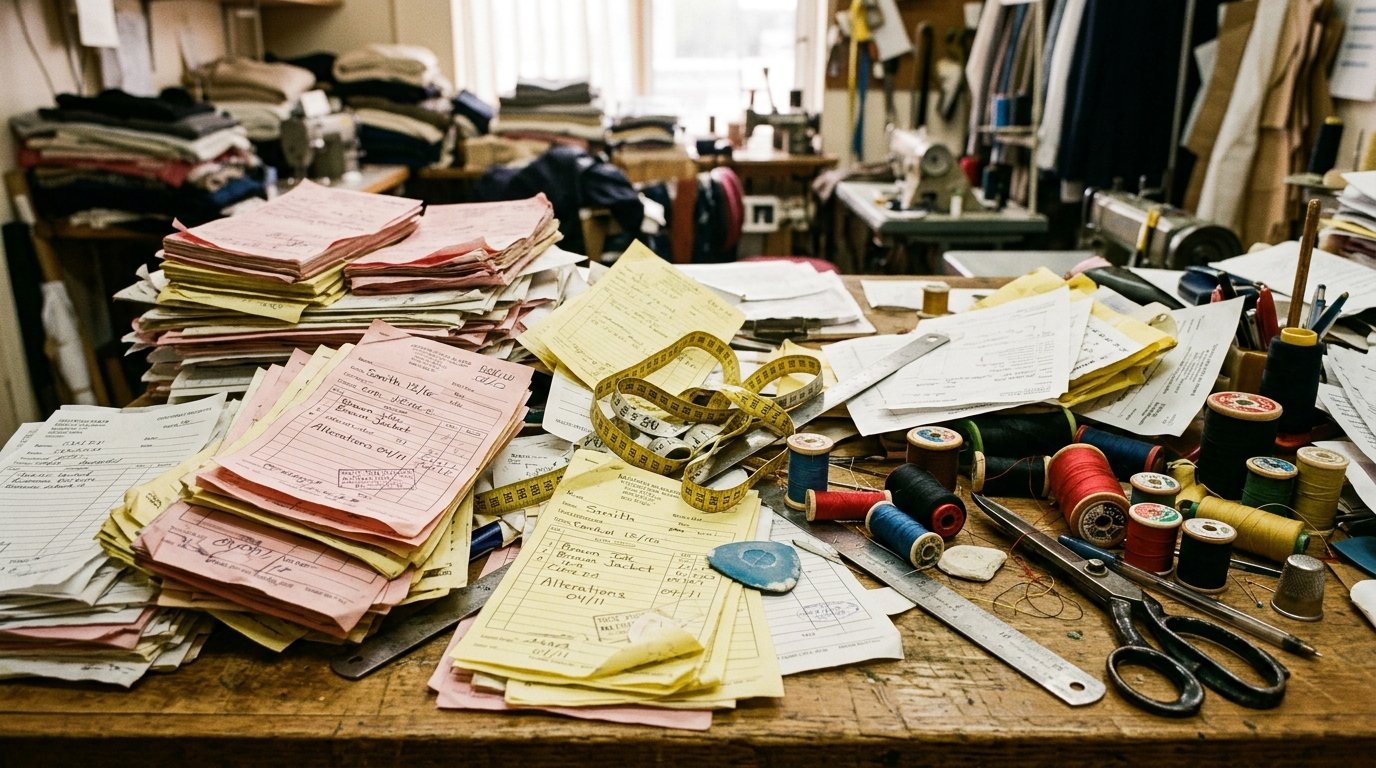
In a paper system, advance deposits are recorded in one notebook, fabric charges in another slip, and final stitching totals on a carbon receipt book. When a rushed customer arrives on a busy Saturday evening to collect her outfit, the front-desk staff struggles to locate the original slip.
All too often, staff accepts a verbal statement: "I already paid the full advance to your colleague last week." The studio hands over the garment, only to discover on Sunday reconciling that an open balance of $120 / ₹4,500 was never settled. Over a year, this balance leakage costs mid-size boutiques between $6,000 and $15,000 in unrecovered revenue.
3. Customer Interruption Whiplash
"Hi, just checking — is my lehenga ready for trial tomorrow?"
Every boutique owner knows the phone call. To answer it, you must stop what you are doing, walk to the back workshop, shout over sewing machine motors to ask the head tailor, flip through three stacks of paper slips, and walk back.
If your boutique receives 20 such calls a day, you lose over 1.5 hours of high-value creative and sales time every single day simply looking for status updates that should be instant.
4. Piece-Rate Tailor Salary Disputes
When tailors are paid on piece-rate (per blouse, per jacket, per trouser), Saturday payout is tension-filled. Tailors claim they completed 18 pieces; your paper log shows 14. Because paper tallies lack date-time audit logs or photo verifications, owners either overpay to keep the peace or risk their best tailor walking out in frustration.
Why Spreadsheets (Excel / Google Sheets) Aren't the Solution
Many boutique owners attempt to solve paper chaos by creating an Excel or Google Sheet. While spreadsheets are better than paper, they fail rapidly in custom apparel for three key reasons:
- No Mobile-Friendly Workshop Interface: Tailors with chalk-dusted fingers cannot navigate complex spreadsheet cells on a mobile phone without accidentally deleting formulas or typing over client data.
- Cannot Attach High-Res Sketches & Photos: A custom order requires reference photos, neckline sketches, and fabric swatch pictures. Spreadsheets become slow and unworkable when hundreds of image files are embedded.
- No Automated Customer Alerts: Excel cannot automatically send a WhatsApp alert with a PDF receipt when a garment moves to "Ready for Trial."
Comparison Matrix: Paper vs. Excel vs. Boutique Manager ERP
| Operational Capability | Paper Register | Excel / Sheets | Boutique Manager Cloud |
|---|---|---|---|
| Measurement Accuracy | Illegible handwriting risks | Flat numbers, no styling notes | 35+ Anatomical Vault + Versioning |
| Workshop Queue Visibility | Shouting across the shop | Manual cell updates | Live Kanban Board with 1-Tap Updates |
| Balance Leakage Protection | High (lost slips, unverified dues) | Moderate (manual reconciliation) | 100% Gated Handover Enforcement |
| Client WhatsApp Updates | Zero (manual typing) | Zero (copy-paste required) | 1-Tap Automatic PDF Dispatch |
| Tailor Role Permissions | None (anyone can read records) | None (accidental edits common) | Role-based "My Work" Mobile View |
Upgrade from Paper in Less Than 15 Minutes
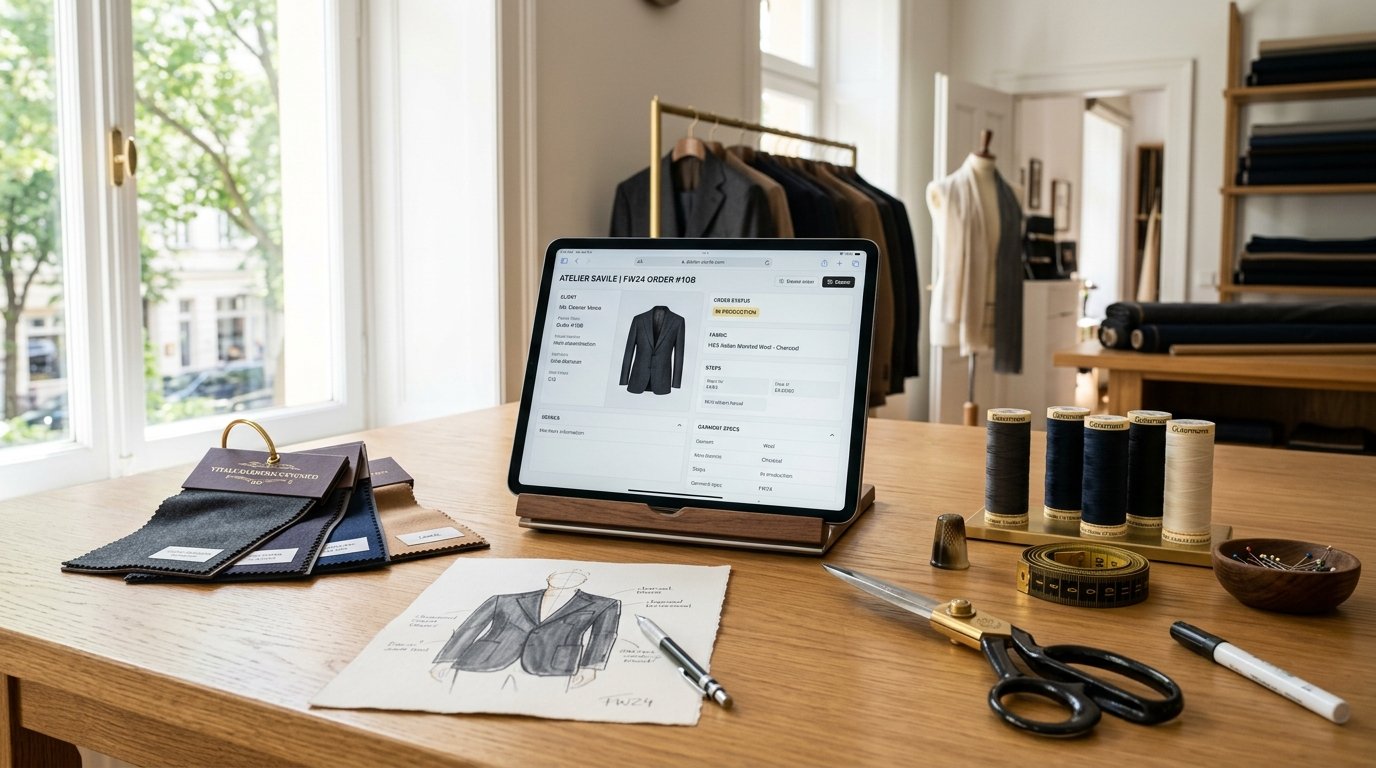
You don't need an IT degree to modernize your boutique. Boutique Manager comes pre-loaded with measurement templates, customizable garment categories, and instant WhatsApp receipts.
The 15-Minute Migration Blueprint
The biggest fear studio owners have is disruption during busy weeks. Here is the exact 3-step transition plan:
- Day 1 – Set Up Your Service Catalog (10 mins): Add your garment types (Blouse, Suit, Gown, Kurta, Trousers) and standard stitching charges.
- Day 2 – Enter Only New Incoming Orders: Do not waste time transcribing old archives. Keep existing in-progress orders in your paper book, but book every new intake into Boutique Manager.
- Day 7 – The Natural Crossover: Within 7 to 10 days, your old paper orders will be delivered and finished. Your entire studio is now 100% digital without an hour of downtime.