

Ask any master cutter why a custom suit collar gapes, an armhole pinches, or a designer blouse pulls diagonally across the bust, and they will give you the same answer: the intake tape measurement was flawed.
In ready-to-wear fashion, brands rely on generic standardized size charts (XS, S, M, L, XL). But in bespoke tailoring, luxury ethnic wear, and haute couture, clients pay premium prices specifically because their bodies do not conform to off-the-rack molds. Relying on a rushed, 6-point paper measurement sheet is the quickest way to produce ill-fitting garments and waste thousands in rework.
The Golden Rule of Fit
Two clients can have an identical 36-inch bust circumference, yet require completely different pattern drafts depending on shoulder slope, chest width vs. back width balance, and apex distance. Circumference alone tells only half the story.
The 35+ Master Measurement Dimension Matrix
To achieve Savile Row suiting precision and couture fitting accuracy, top studios organize body intake across three distinct anatomical zones:
| Anatomical Zone | Core Fit Metrics | Technical Landmarks | Why It Matters for Cutters |
|---|---|---|---|
| Upper Torso & Bodice | Across Shoulder, Front Cross Chest, Back Width, Full Bust, Underbust, Apex-to-Apex (Bust Span), Shoulder to Apex | Acromion bones, sternum center, nipple apex point | Prevents armhole wrinkling, front gaping, and ill-positioned princess seam apexes. |
| Sleeve & Armhole | Armhole Circumference, Bicep Muscle, Elbow, Wrist, Full Sleeve Length (Straight & Bent) | Shoulder tip over elbow bone to wrist bone | Ensures full arm mobility without lifting the entire jacket torso when reaching forward. |
| Waist & Pelvis | Natural Waist, Low Waist (Trouser band), High Hip, Low Hip (Seat), Crotch Depth / Rise, Inseam & Outseam | Smallest waist point, iliac crest, fullest buttocks projection | Eliminates diagonal crotch whiskers in trousers and side seam bunching in skirts. |
Inches vs. Centimeters: Stopping Workshop Unit Confusion
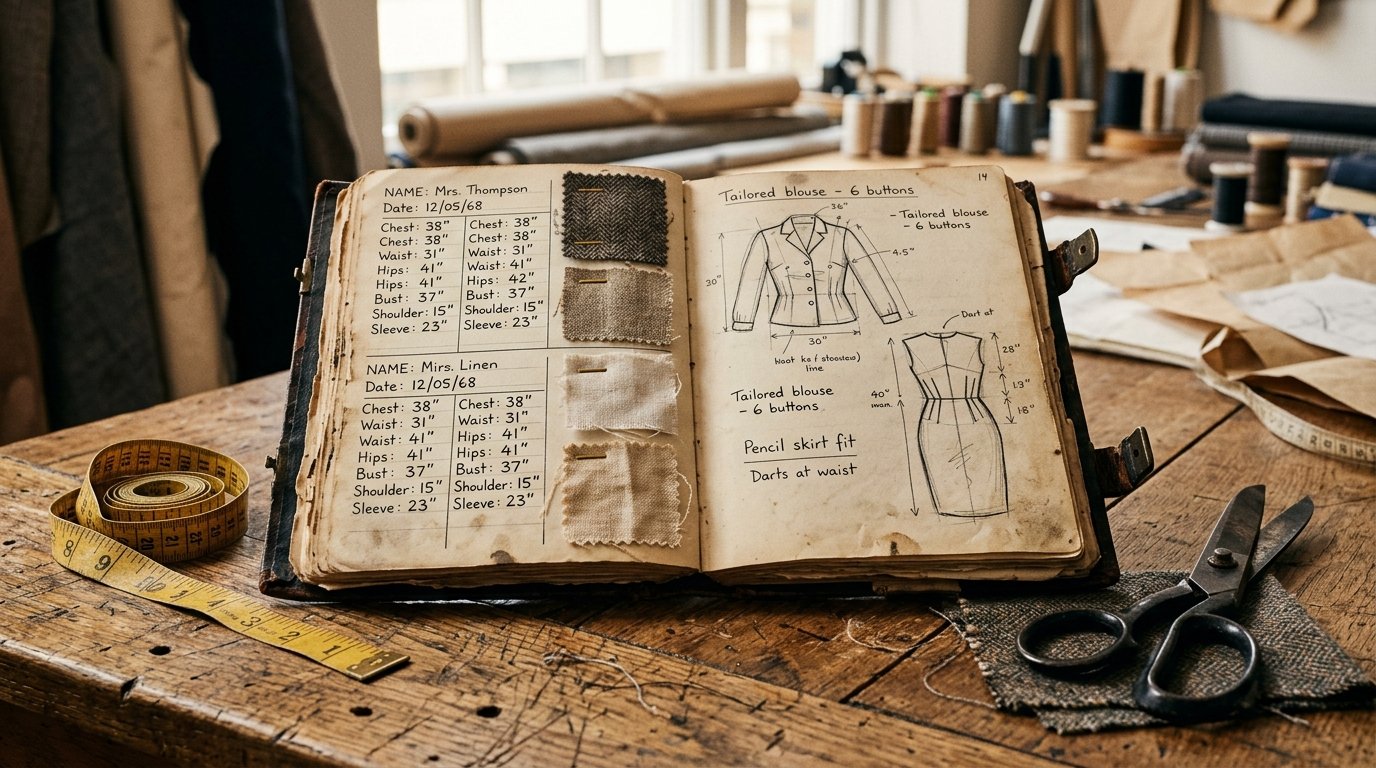
One of the most frequent causes of ruined fabric in multicultural studios is unit mismatch. A designer takes measurements in Inches, but an artisan trained in a metric-dominant country cuts in Centimeters. A single miscalculation (e.g., assuming 38cm is a waist dimension when 38 inches was meant) destroys expensive silk.
Modern studios enforce a single digital database with an instant 1-tap Inches / Centimeter converter. When a master cutter toggles the screen, every measurement field recalculates automatically with zero rounding errors.
Accounting for Posture: The Invisible Dimension
Standard measurement tapes cannot measure posture posture angles. Experienced fitters record three vital structural flags:
- Shoulder Slope: Square shoulders require raising the outer armhole; sloping shoulders require lowering the shoulder seam to prevent neck pooling.
- Spinal Curvature: Erect military stance requires lengthening the front balance; stooped/rounded back requires adding 0.5 to 1.5 inches to the center back seam.
- Prominent Seat vs. Flat Seat: Affects back trouser fork depth and lehenga skirt back hem drop.
Store 35+ Metrics in Boutique Manager's Cloud Vault
Replace paper logbooks with Boutique Manager's Digital Measurement Vault. Store unlimited body metrics per client, attach client posture reference photos, toggle between Inches/CM instantly, and maintain permanent version history (v1, v2, v3) across appointments.
Checklist: Best Practices for Intake Consultations
- Verify Foundation Undergarments: Never measure a client wearing heavy knitwear or sports bras if the final garment is a corseted bridal lehenga or cocktail dress.
- Keep the Tape Level: Ensure measuring tape remains parallel to the floor during all circumference passes, especially across back blade and seat.
- Photograph Posture Silhouettes: Snap front, side, and back profile photos with client consent and attach them directly to their cloud file.
- Record Ease Allowances Separately: Keep skin measurements separate from garment ease (e.g., skin chest 36" + 2" comfort ease = 38" cut spec).
- Update Version Records Annually: Never overwrite last year's bridal measurements. Save new fits as v2 so you retain full historic size history.